
Best Soundbar Picks & Buying Guides
Best Soundbar for Podcasts and Audiobooks at Low Volume
7th Oct•12 min read
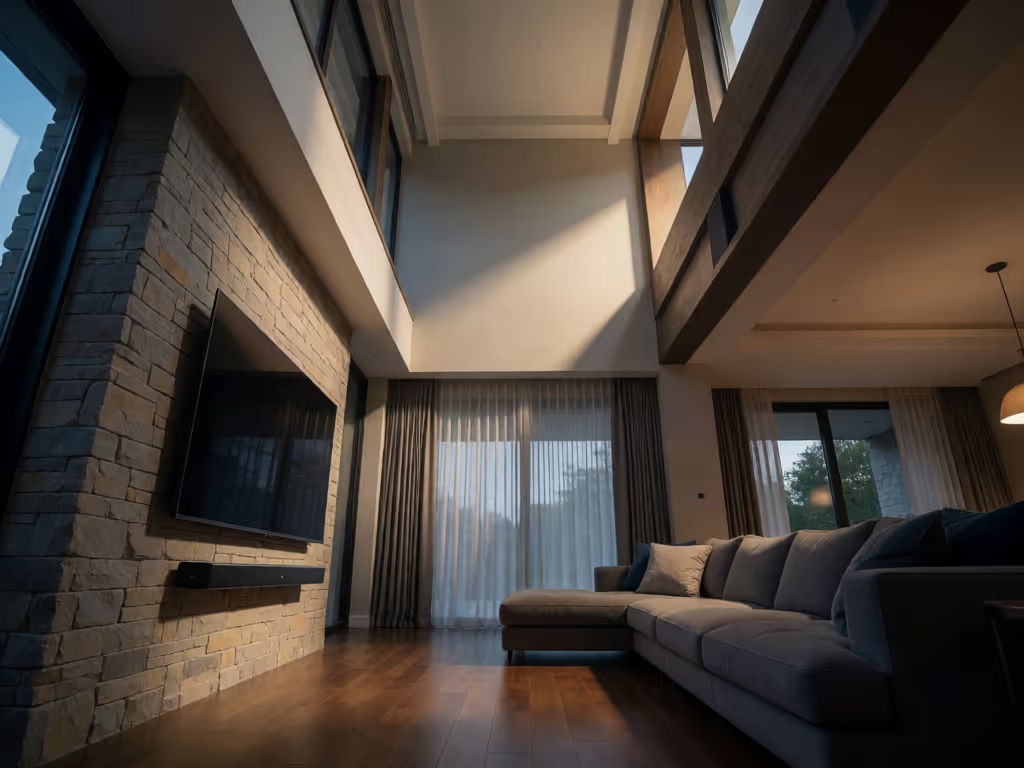
For a high or vaulted room, check the soundbar’s intended height method before comparing features.
Important: There is no universal ceiling-height pass/fail rule for every soundbar or Atmos implementation, and the evidence does not establish whether virtual height or beamforming overcomes difficult room geometry.
Choosing a soundbar for high ceiling rooms starts with a constraint many shopping guides skip: the ceiling is part of the signal path when a bar uses upward-firing height speakers. This soundbar ceiling height guide separates what a tall or vaulted ceiling changes, what it does not, and where expectations should be deliberately conservative. The goal is not to turn a ceiling measurement into a pass/fail verdict; it is to avoid paying for a reflected-height feature whose intended route does not suit your room.
Route first, then features; reliability makes rooms feel cinematic.
"Atmos" alone does not identify how a system creates height. For room planning, distinguish Dolby's documented physical arrangements from virtual-height claims rather than treating them as interchangeable.
| Height approach | How it is intended to work | What the ceiling means |
|---|---|---|
| Upward-firing physical height channels | Speakers fire upward and use a ceiling reflection | Ceiling height and shape are central to the intended path |
| Ceiling-installed downward-firing height speakers | Speakers are installed overhead and fire downward | This is a different Dolby-described height-speaker arrangement, not a soundbar placement method |
| Virtual-height processing | The available guidance does not describe how it works | Do not assume it follows the same rules, or solves the same problems, as physical reflection |
Dolby describes the first two physical arrangements: height speakers installed in the ceiling firing down, and upward-firing speakers that bounce sound from the ceiling. That distinction is useful because only the reflected, upward-firing route has a specific ceiling condition in the available guidance.
For best results with upward-firing Dolby Atmos speakers, Dolby specifies a flat, non-angled, non-vaulted ceiling between 7.5 and 14 feet high. The wording matters: this is a best-results condition, not a promise that every room inside the range will sound identical, nor proof that an effect is impossible outside it.
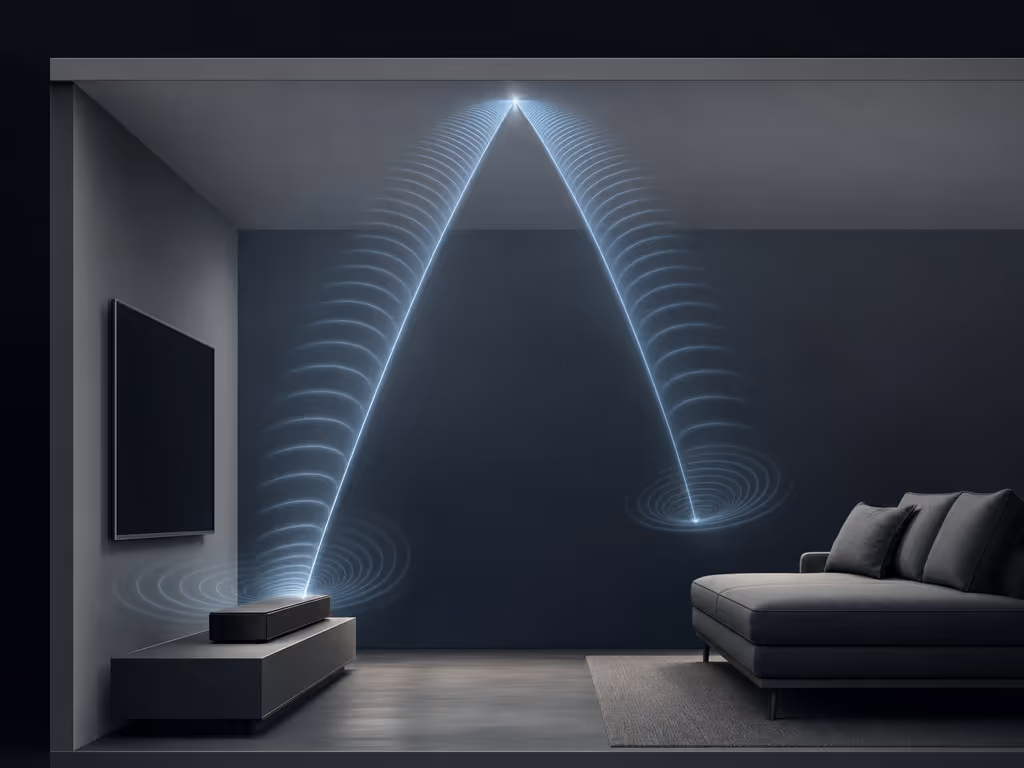
An upward-firing height channel is not merely "sound pointed toward the ceiling." Dolby's installation guidance says the desired route is the first audio reflection from the ceiling, while reflections from elsewhere in the room should be avoided. A flat ceiling gives that route a clear, simple geometry: sound leaves the bar, meets the ceiling, and returns toward the listening area.
A vaulted or angled ceiling breaks the cleanest version of that route. That is enough to change a purchase decision when upward-firing height is the feature carrying most of the price premium. It is not enough to declare that every soundbar will perform poorly in every vaulted room. The evidence does not establish a universal outcome for all bars, room sizes, or layouts.
In practical terms, compare the room to Dolby's condition rather than asking whether the room is merely "large" or "open":
Tall ceilings can dominate the conversation, but placement remains an important check for everyday listening. Its soundbar placement deserves a separate check from its height-channel claim.
A practical manufacturer recommendation is to center the bar with the TV, place it directly below and close to the screen, leave its front unobstructed, face it toward the seating area, and aim it toward seated ear level. This is sensible layout discipline for a TV stand, wall-mounted television, or projector screen arrangement alike.
Dolby's general guidance for main speakers places them around seated ear level, approximately 3.9 feet from the floor. This is not a soundbar-specific mounting specification, so do not convert that figure into a rigid mounting rule. Use it as a listening-height reference: avoid placing the bar unusually high, burying it behind furniture, or letting a cabinet edge block its front.
Measure and note four items from your normal seat:
This is the unglamorous part of soundbar room acoustics, but it prevents a common mismatch: judging a bar by a feature diagram before mapping the actual route the sound must take.
For many buyers, the real decision is not "Atmos or no Atmos." It is whether to spend around a reliable main soundstage or put extra budget toward physical reflected height in a room that may not support its intended path.
If clear dialogue, sensible listening levels, and a tidy one-remote setup are the priorities, judge a soundbar by how it will fit and face the seating area. The ceiling may still influence the character of the room, but it does not erase the value of correct bar placement.
A commercial acoustic-art seller says hard reflective surfaces in high or vaulted rooms can create unwanted reverberation; that is not a quantified rule for every living room. If speech seems less distinct than expected, first make sure the bar is unobstructed and aimed toward listeners. Then use the soundbar's available room-calibration feature if it has one. Dolby notes that some soundbars include modes that listen to room audio and adjust settings for that room.
Calibration is optimization, however, not a documented cure for unsuitable ceiling-reflection geometry. It should not be used as the reason to disregard a vaulted ceiling when buying an upward-firing model.
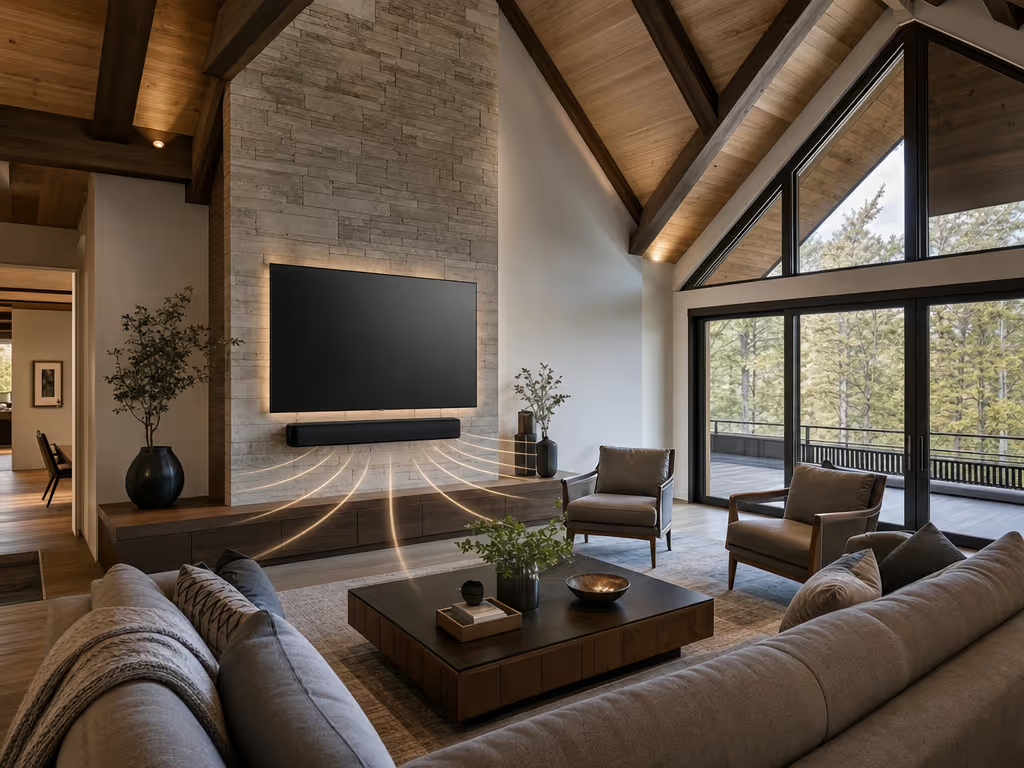
If a convincing physical height layer is your central goal, be stricter. The strongest documented case is a flat ceiling in the 7.5 to 14 foot range and a clear upward path. In that scenario, upward-firing height channel effectiveness has an intended reflection surface to work with.
If your ceiling is vaulted, sharply angled, or far outside that condition, make the purchase with a different mindset: any reflected-height impression is a bonus, not the foundation of the decision. Do not let an Atmos badge outweigh a bar's fit, obstruction-free placement, and basic usability.
The virtual vs physical height channels comparison often gets flattened into a winner-and-loser claim. It should not.
Physical upward-firing channels have a documented dependency: they are intended to use the first ceiling reflection, and Dolby provides a flat 7.5 to 14 foot best-results condition. That is concrete enough to use in a room plan.
Virtual-height processing is a separate category. There is no collected evidence here that establishes how it performs in vaulted rooms, whether it is more dependable than upward-firing channels in high-ceiling spaces, or whether any soundbar's beamforming can overcome asymmetry, open sides, or difficult ceiling geometry. Treat claims in those areas as model-specific questions to investigate with the manufacturer, not assumptions this guide can settle.
That restraint is valuable. A ceiling-mounted projector and a media cabinet at the other end of the room once taught me that feature lists are secondary to the route: we mapped every connection, solved the handshake, and hid the long run cleanly. Audio layout benefits from the same thinking. Keep the signal path and the acoustic path equally intentional, handshake stable at the inputs, unobstructed at the bar, and realistic about the ceiling above it.
It can mean different things depending on the height method. For upward-firing Dolby Atmos speakers, Dolby's best-results guidance calls for a flat ceiling between 7.5 and 14 feet. That does not establish a universal yes-or-no answer for all high ceilings or for other Atmos speaker arrangements, including ceiling-installed downward-firing height speakers.
Dolby's stated best-results range is 7.5 to 14 feet, with a flat, non-vaulted ceiling. Keep the qualifier attached: it applies specifically to upward-firing use and is a best-results recommendation, not a universal threshold for all soundbars.
Place it directly below and close to the TV where possible, centered with the screen, unobstructed at the front, facing the seating area, and aimed toward seated ear level. Avoid mounting it so high that it no longer addresses listeners naturally.
Start by identifying hard, reflective surfaces with this room acoustics guide and by correcting the soundbar's placement before buying accessories. A commercial acoustic-art seller says hard reflective surfaces in high and vaulted rooms can create unwanted reverberation, but this guide cannot support a universal treatment recipe or numerical prescription. If the issue remains important, assess the room and any proposed treatment with an acoustics specialist rather than assuming a single material or quantity will fix it.
A tall room does not automatically rule out a soundbar, and a Dolby badge does not automatically promise overhead immersion. For upward-firing designs, ceiling geometry is a meaningful compatibility check: flat and 7.5 to 14 feet is Dolby's best-results case; vaulted or angled ceilings deserve tempered expectations.
From there, return to the fundamentals: a centered bar, a clear front, a direct aim toward seating, and a route that stays serviceable rather than fragile. For further exploration, sketch your display, bar, main seat, and ceiling shape on one page before comparing specifications. That small map will tell you more about the right direction than another column of codec logos.
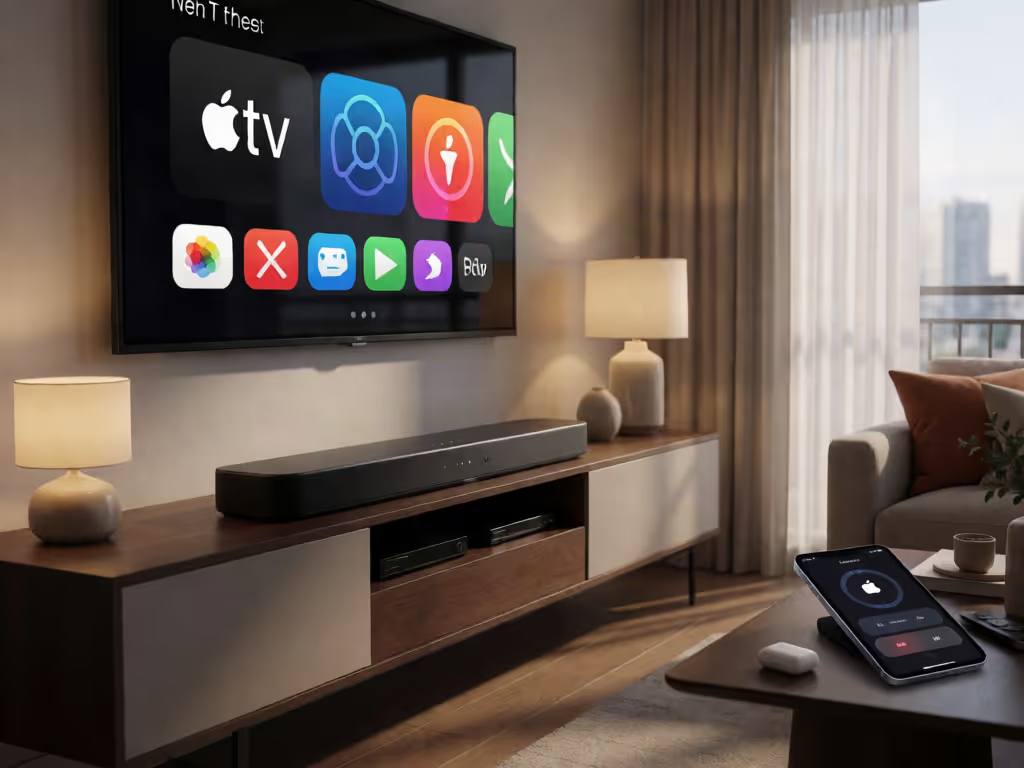
![Suggested Title: Dorm Room Soundbar Setup for Clear, Quiet TV Audio
This focuses on compact soundbars sized for dorm TVs that improve dialogue clarity while staying friendly to shared-wall quiet hours and student budgets[1][6][9].](/images/article/thumbnail/48cc1a59-35c7-41c5-a8c4-7c46b8f770e4.avif)